Pastels are an art material made from compressed pigment, pressed into either a stick or pan form. As I shared in the article on Using Pastels with Polymer Clay, pastels are an indispensable art supply that will expand your color possibilities when working with polymer clay. You can use pastels to color the surface of unbaked polymer clay, as well as to add color to many techniques. Read on if you’ve ever been confused about the difference between Pan Pastels and regular soft pastels. (Note, pigment is not the same thing as mica, see here.)
In the polymer clay community, you’ll often hear others refer to an art product called Pan Pastels (affiliate link). Some even mistakenly refer to all types of pastels as Pan Pastels. (I think that’s just a slip of the tongue…the products are separate.) Pan Pastels are a specific brand of soft pastels made by Golden. In other words, Pan Pastels are a specific brand and a unique form of soft pastels.
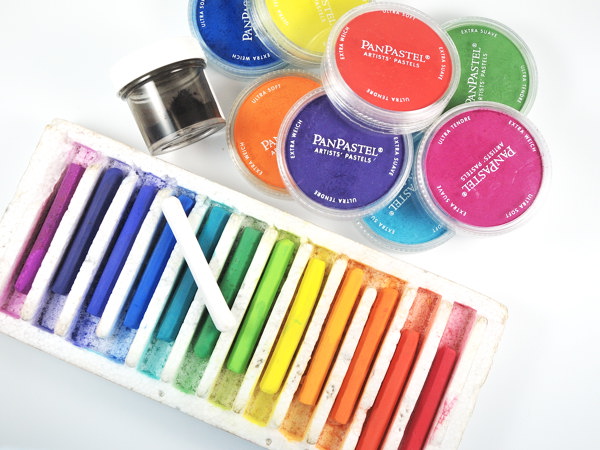
As an aside, soft pastels are not chalks. Technically, it is erroneous to call this material “chalk pastels”. I know I’m being pedantic, but I got called out on this years ago and when I looked it up, they were right. Soft pastels it is. Chalk it is not.
What Are Pan Pastels?
Pan Pastel is a brand of artist-quality pastel that is pressed into a pan or cake form, just like the blush or eye shadow that you are already familiar with. Each color comes in its own pan and each pan can screw into the bottom of another pan, making a tower. This is super convenient for connecting colors together for a project or carrying them for travel. There are also trays that allow you to arrange your desired pans into a palette, which is my preferred way to use and store them. To use Pan Pastels, just open the lid and rub your tool or finger on the surface of the pan to load up with color.
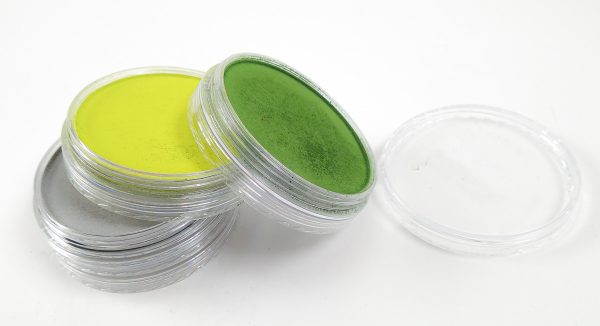
Most of the colors in the Pan Pastel line are regular artist’s pigments like ultramarine blue, chromium oxide green, and Hansa yellow. But there are also a few metallic and pearlescent colors (Amazon affiliate links) which contain mica and are more similar to frosted eye shadow. These are not comparable to soft pastels and are used in a different way to pure pigments. I’ll save them for another day.
Advantages of Pan Pastels
When using pastels on polymer clay, you don’t apply the color by drawing with a the pastel stick. Instead, you scrape the stick to make a pile of loose powder and then apply that powder to the clay with a tool or your finger. With Pan Pastels, you don’t need to scrape anything. The pigment is soft enough to load the brush or your finger by rubbing it on the pan, just like blush or eye shadow. This means you have a cleaner application process with much less mess and better precision and control. You don’t need to take more pigment than you’ll use.

Pan Pastels are quite soft and you can easily load the brush without rubbing hard. The pigment is rich, saturated, and applies smoothly to the clay with great coverage. Additionally, because the powder easily releases from the pan without scraping, there are no gritty pieces that can happen when you scrape a pastel stick with a blade.

Polymer clayers recommend Pan Pastels because they are high quality pastels that perform well and have a great form factor. Stick pastels must be scraped to release powder. That interruption in creative flow is significant! Pan Pastels are incredibly convenient.
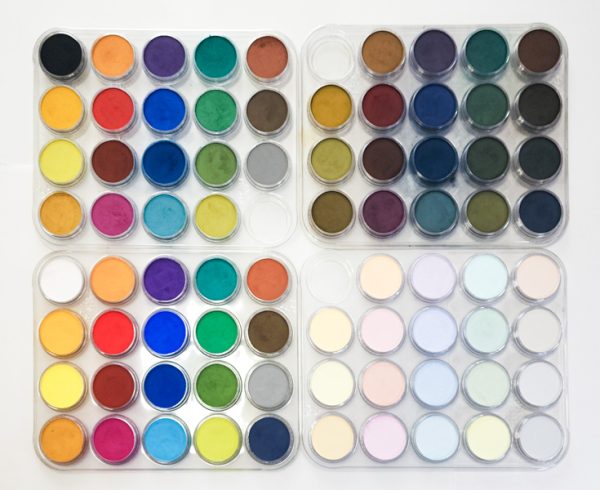
Pastels also come in a full range of colors along with their corresponding tints and shades (with added white or black). This gives you incredible artistic continuity and the ability to modulate the intensity of the colors you apply to your clay.
Pan Pastel vs Soft Pastels, a Quality Comparison
Pan Pastels are artist quality pastels and they are comparable to any other brand of artist quality pastels, such as Sennelier (affiliate link). The richness of color, the colorfastness, the quality of the material itself will be very similar. The big difference is the form factor. Pan Pastels are super convenient for polymer clayers and stick pastels aren’t. It’s really that simple.
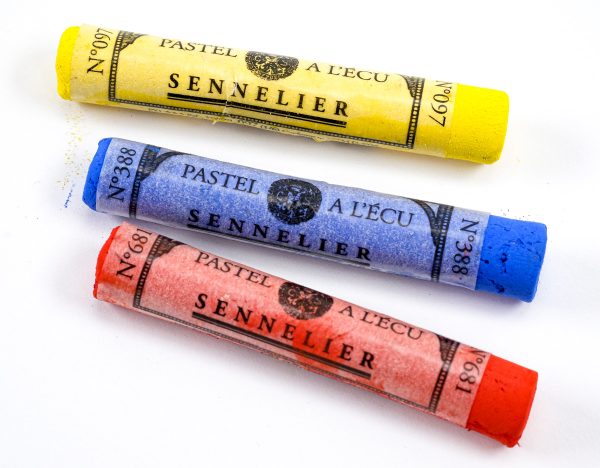
But when most of us are talking about soft stick pastels, we’re not talking about high-end artist-quality soft pastels. Most of the time we’re referring to inexpensive craft-quality sets that you can buy at any craft store or online. And the big difference here is the pigment density of the sticks. Cheap craft level soft pastels tend to be hard, come in a limited range of colors, tend to change color more with baking, and have a lot of fillers that can lead to less saturated color than you could have with Pan Pastels.
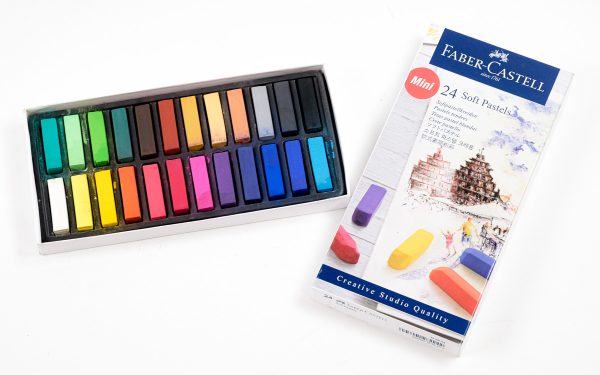
There is a huge price difference between artist-quality pastels such as Pan Pastels and craft-quality soft pastel sticks. Most crafting sets will run you about $10 for a good assortment of colors. Pan Pastels are about $8 EACH. (A bit less if you buy a set.) This is a significant difference in price and will have a large impact on your budget. But pigment is expensive and all artist-quality fine art supplies are expensive, regardless of the form factor.
Making the Choice
So, which one should you buy. Here’s my thinking on this. If you’re new to using pastels or pigments on the surface of the clay, then get a cheap craft set and explore. This will absolutely get you started and you’ll quickly begin to see the usefulness of applying pigments to the surface of the clay. (Seriously, it’s a very versatile method!) I never suggest blind-buying Pan Pastels first.
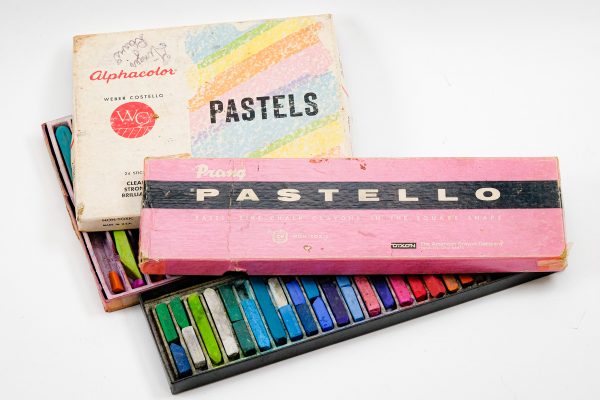
If you come from the fine art world and already have artist-quality pastels you might not even want to bother with Pan Pastels. You already have great pigments at hand! It’s also worth checking your local “re-use crafting store” if you’re lucky enough to have one.
Once you’re familiar with using regular stick soft pastels on polymer clay, you’ll soon know if they’re sufficient for you or if you would benefit from more color being laid down on the clay. If so, you’re ready for Pan Pastels. I love that I can really, really, really load the pigment onto the clay because I can get so much powder off the pan of Pan Pastels. I started with a few bright colors and then I expanded. I’ve not looked back and now I have the entire range of Pan Pastel colors. (I don’t recommend buying them all…you just don’t need them!) I’m a huge fan of Pan Pastels.
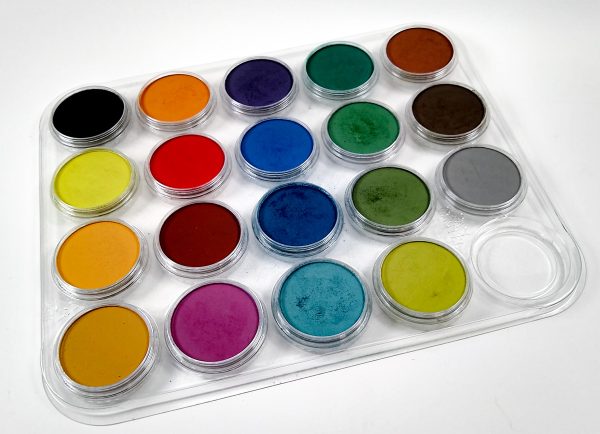
If you’re ready to invest in Pan Pastels, then what? I do recommend learning how color ranges work within the Pan Pastel line. I have an article about those AND a full explanation of the new expansion pack in Blue Bottle Insiders. These member’s only articles go into detail about the various color ranges and how they might be used with polymer clay. If you’re ready for that deep dive you can join Insiders here.