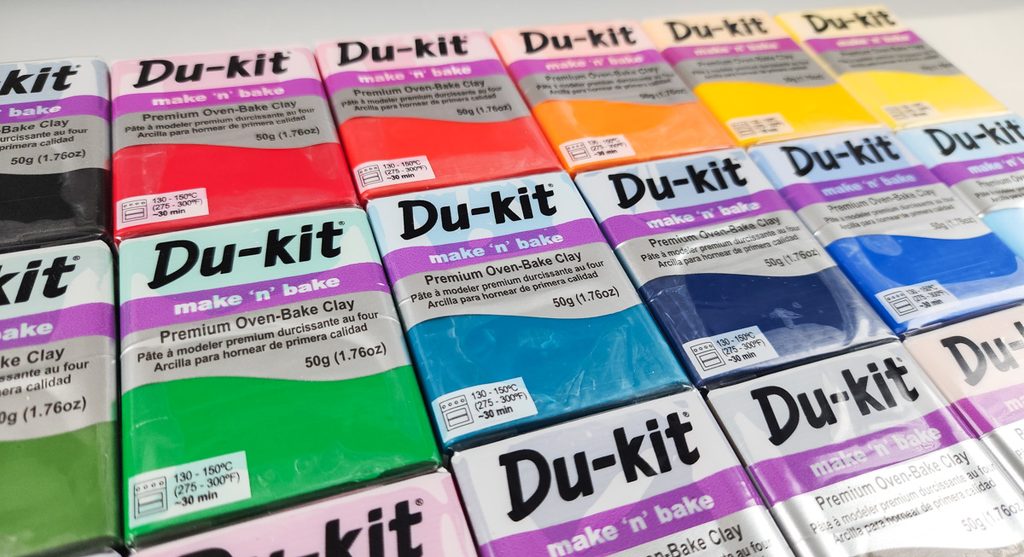
We’re all familiar with the usual polymer clay brands of Sculpey, Cernit, Fimo, and perhaps even Kato. You might even have heard of regional brands like PVClay (Brazil) and GaPo Art (Colombia). But one that you really should explore is Du-kit polymer clay, an established, premium brand from our friends way down south in New Zealand. Du-kit is a high-quality polymer clay brand with excellent working properties and great colors, comparable to other polymer clay brands you already know and love.
Is Du-kit Polymer Clay New?
Du-kit has been around for over 50 years! Back in 1972, a farmer named William Currie worked with a chemist friend from Auckland, New Zealand, to develop a brand of polymer clay. It was originally called Du-it, but the name was changed after consulting a marketing agency to better fit the needs of the polymer clay market. The formula has been tweaked as it developed over the years, but it’s still made right there in New Zealand. The company is still family-owned and run, now by Paul Currie and “a few friendly helpers behind the scenes,” as he says.
Overview of Du-kit Polymer Clay
- Du-kit has been on the market for over 50 years and is made in New Zealand
- It’s available in New Zealand, Australia, and on Amazon in the US
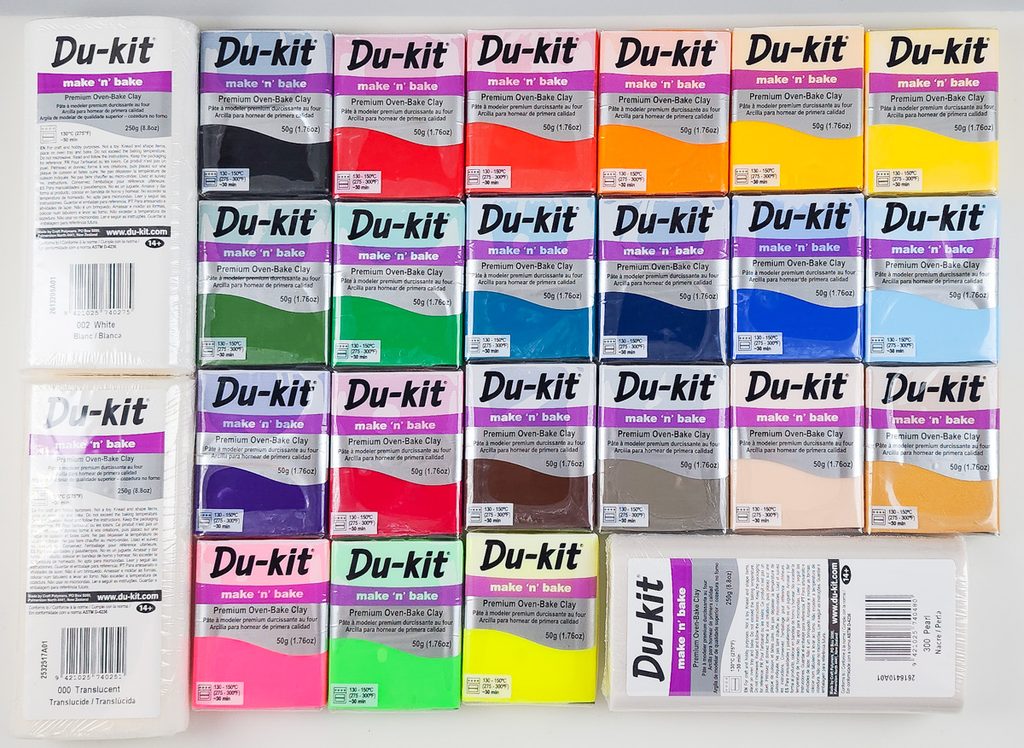
- There are 24 colors, including translucent, gold, pearl, and fluorescent
- The spectral colors are deeply saturated and excellent for mixing any color you’d like
- Du-kit handles well, is not crumbly, bakes strong and flexible, and polishes well to a shine
- Because all colors are the same consistency, it’s a great caning clay
- By comparison, it’s closest to Premo but handles better and is more uniform from color to color
- It’s stiffer than Premo but not as stiff as Kato after baking
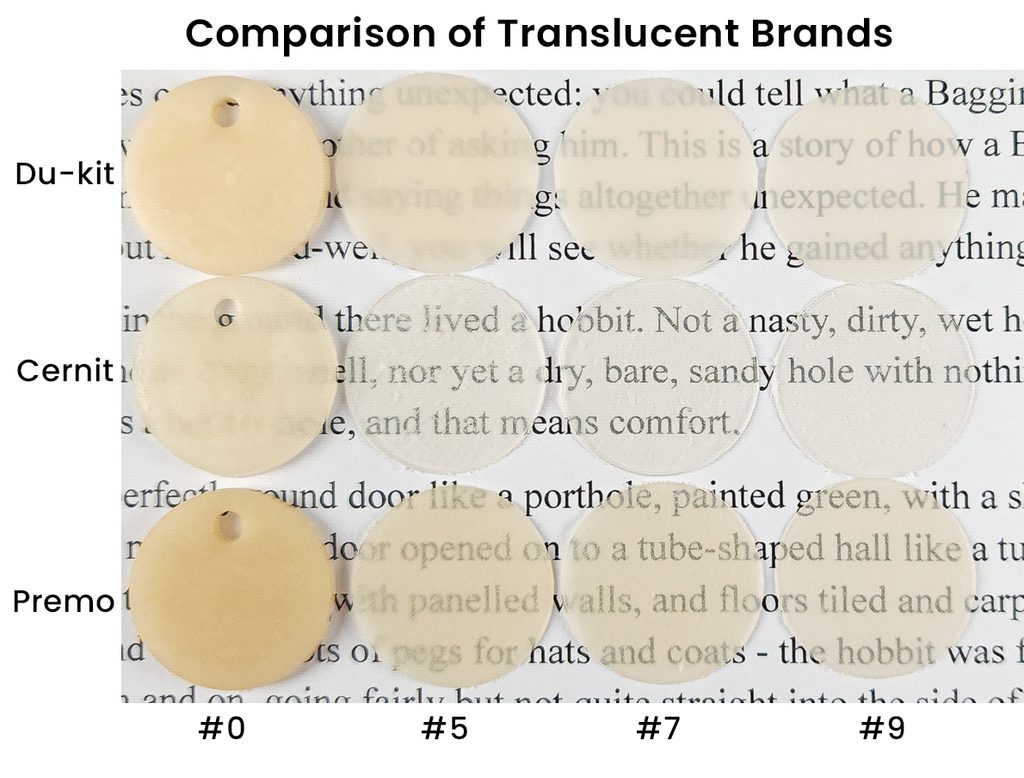
- The translucent does darken a bit with baking and is less translucent than Cernit
- Highly recommended, especially if crumbly clay drives you crazy
How it Comes
Du-Kit is available in 24 colors, including translucent, pearl, gold, peach/flesh, and three fluorescent colors. All 24 colors come in 50g packages, and 12 also come in large 250g packages. The shrink-wrap packaging is flush with the bar, so there’s no annoying excess plastic tab. Note that the small 50g packages are slightly smaller than most other brands (which are generally 52g).
How Does Du-kit Compare to Premo, Fimo, and Kato?
First, let me assure you that Du-kit isn’t some second-rate generic polymer clay from China. This is a high-quality, lovely polymer clay, and you will enjoy working with it. It’s most similar to Premo, but it also has important differences. When I mentioned my review on social media, Kato fans hoped it would be similar, but it really isn’t. But it’s more like Kato than Fimo. It’s really nothing like Fimo. Want to know more? Keep reading!
Du-kit Polymer Clay Consistency
Du-kit comes out of the package smooth and supple. It does need to be conditioned, but it is NOT crumbly. It is not a shattering clay like Fimo. Every single bar that I received (all 24 colors) was easy to work right out of the package, and I was able to sheet the clay and mix colors by hand with little effort. It is soft, but holds a good impression when you use a texture. It cuts well with cutters. It is not sticky. It does leave a slight color residue on your hands, but then so do all clays. But it doesn’t leave your hands coated in clay residue the way Fimo can. As with all brands of clay, trapped bubbles are a frustration you’ll recognize, but it’s not any worse than with Premo.
The clay that I received from the manufacturer was undoubtedly fresh, but how will the texture change over time? Does it get hard and crumbly the way Fimo does? As it turns out, I have a handful of older Du-kit bars that the wonderful Kim Snowden gifted me in 2022. And those bars had exactly the same consistency as the ones I used for this review. So I’m optimistic it will keep its great handling characteristics over time.
It’s not as stiff to handle as Kato, so if you have super hot hands and struggle with other brands, you’ll struggle here as well. It handles very similarly to an average block of Premo. All of the colors had pretty much the same consistency, by the way.
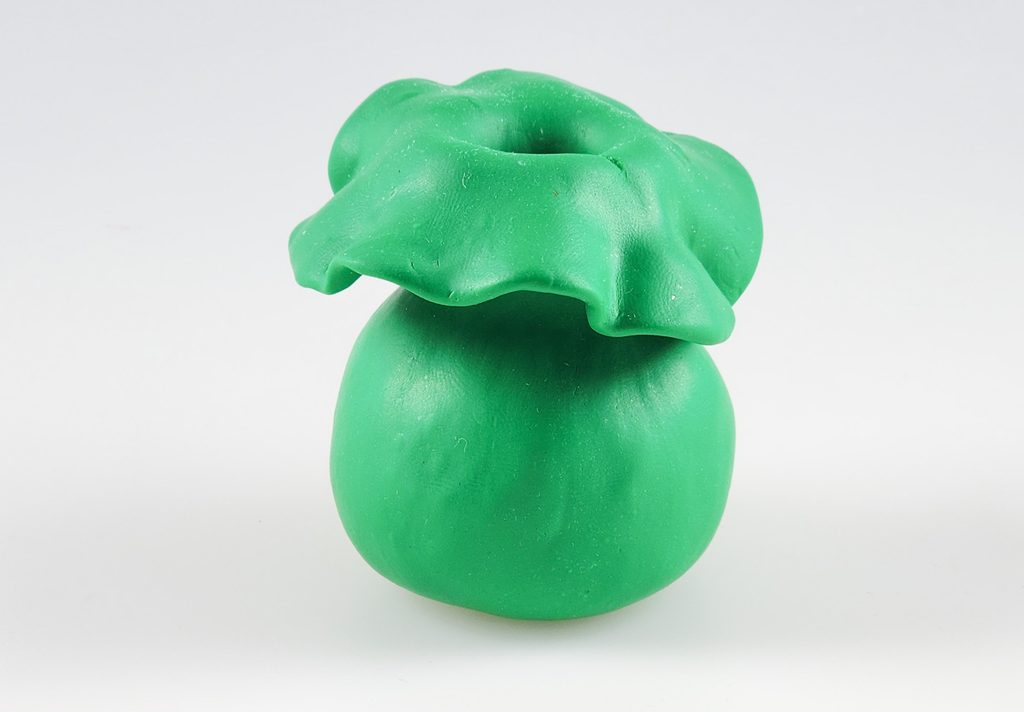
I always like to make a pinch pot vase when I’m evaluating a clay brand’s handling, because it tells me a lot about its consistency, flow, stickiness, and workability. I found it to be smooth, easy to work with, and easy to handle. It was not difficult to shape. You won’t find any surprises here. It’s rather similar to Premo, really, except that all the colors behave the same, unlike Premo.
Tell Me About the Colors!
I posted on social media (you do follow me, right?) that I was doing this review and asked for suggestions. The majority of the questions were about the colors. Polymer clayers do love our colors! You wanted to know whether Du-kit had a good color range and whether the colors could be mixed to provide a suitable range of color possibilities. Oh, ye of little faith! Of course it does!
The colors are deeply saturated, and I wondered, when I looked at the bars of clay, whether it was highly translucent. It’s not. But the colors are deeply saturated, and none of them (aside from light blue) have much white. This is not a brand that comes out with new “colors” every few months by adding another color to white, as that well-known American brand does. But as with any clay without opaque pigments in the mix, you will sometimes see plaques just below the surface in certain colors.
What About Primaries?
Ever since Lindly Haunani and Maggie Maggio released Polymer Clay Color Inspirations in 2009, clayers have been eager to learn whether a brand has good mixing primaries based on the CMY palette. This means that there is a set of three colors that can be used to create clear, clean, saturated secondary colors. In other words, can you make any color from this set? Yes, you can. I was pleasantly surprised at what I was able to mix.
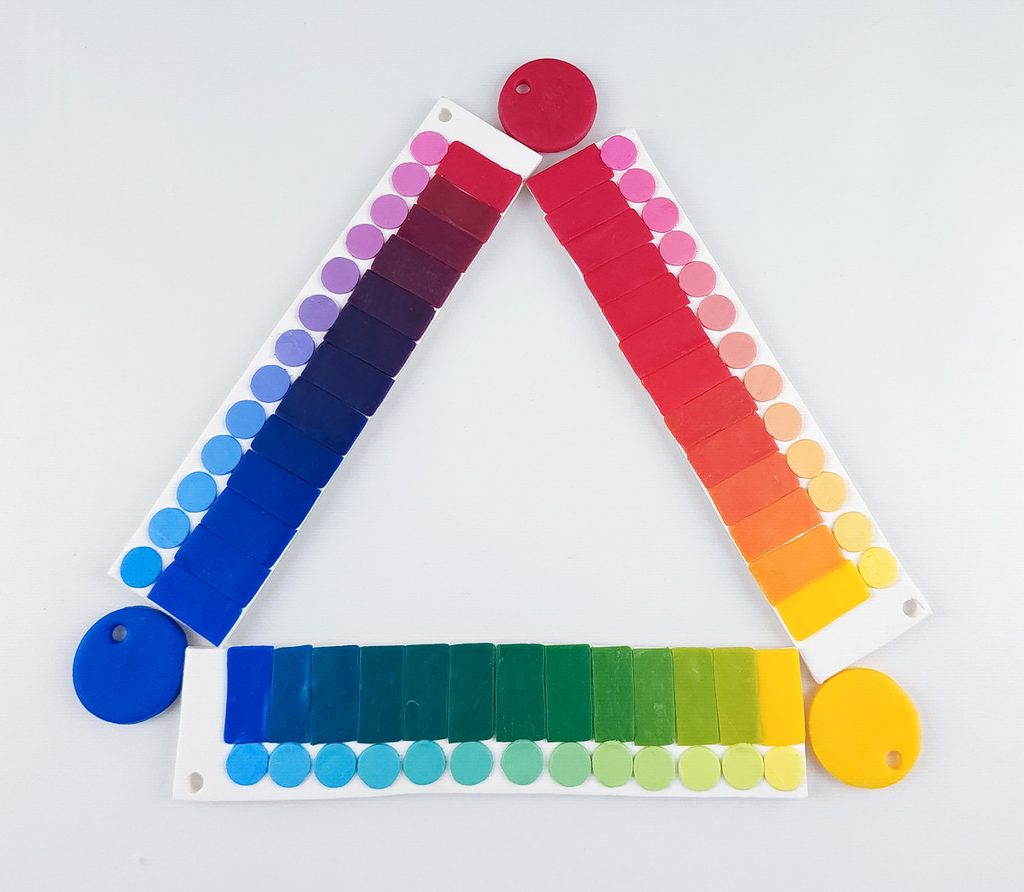
Premo’s CMY primaries are Cobalt Blue Hue, Fuchsia, and Zinc Yellow. Du-kit doesn’t have colors that directly correlate to those colors. Let me go into some detail about what I found. In short, I think the best CMY (or RYB for that matter) mixing primaries with this brand are Blue, Ruby, and Yellow.
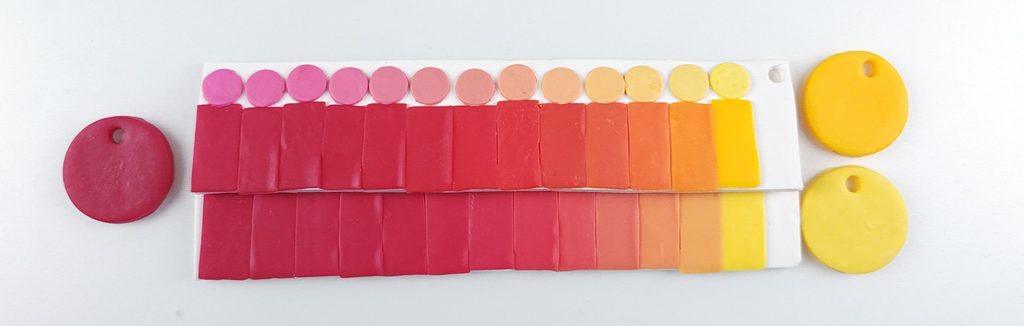
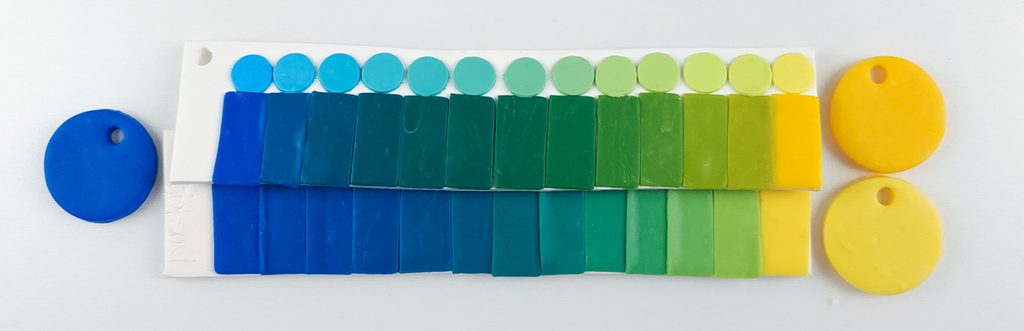
To evaluate the undertones of the various primaries, I made color strips using Joan Tayler’s Polymer Clay Colour Logic tutorial. This (and other color-scale-type exercises) is an excellent way to see how primary colors interact. It reveals color bias in each primary.
The Blues
In its range, Du-kit has four blues (depending on how you count the teal). The blue is a nice, neutral, normal shade, quite similar to Premo’s Cobalt Blue Hue. There’s a navy and a light blue, but neither is a primary color, obviously. The teal is on the green side, so I didn’t consider it a primary color and mixed it with Blue. The teal is really a deeply saturated turquoise, though, so if you like using Premo’s turquoise as your primary blue, this one might do for you as well.
The Reds/Magenta
There are three reds and no obvious magenta. Scarlet is an orangey red similar to Premo Cadmium Red. Red is a true red like Premo Pomegranate but brighter. And the Ruby is the surprise. Looking at the package, it seems to be burgundy with black in the mix. But it is actually just a deep magenta (perhaps with a wee bit of black). I used it as my red/magenta in all my color mixes. The lack of a bright magenta is a weak point for this brand. You can use bits of fluorescent pink if you need to go more intense for a specific project, however.
The Yellows
Du-kit only has two yellows. At first, I went with the Lemon Yellow color for my color mixes because the darker Yellow block appeared to have an orange bias. But I soon realized that the Lemon Yellow is not very saturated and has poor tinting strength. It was easily overpowered by the intensity of the Blue and Ruby colors. I then made color strips using Yellow as my primary color, and you can see it did much better. I also realized that Yellow looked orange because it was deeply saturated, not because it leaned orange.
About Fashion Colors…
When people talk about clay brands online, they often say they prefer a particular brand for its colors. I get that. But please know that MOST of the colors you buy from brands like Sculpey and Cernit are what could be called “fashion colors”. They’re mixes. This does mean that you can use them straight out of the package, yes, and that can certainly be convenient. But please remember that you can mix those colors yourself. Du-kit’s colors are INTENSE. I doubt you’d use most of them straight out of the package. You’d want to mix them, especially if you’re making jewelry. But the key here is that you CAN make intensely bright things, which you absolutely cannot do if you’re starting from pastels and mixes. Du-kit colors are raw materials, sort of like tubes of paint. Just assume you’re going to mix the specific color you need. (For help with understanding color, Joan Tayler has a great tutorial/book here.)
Metallic Colors in Du-kit Polymer Clay
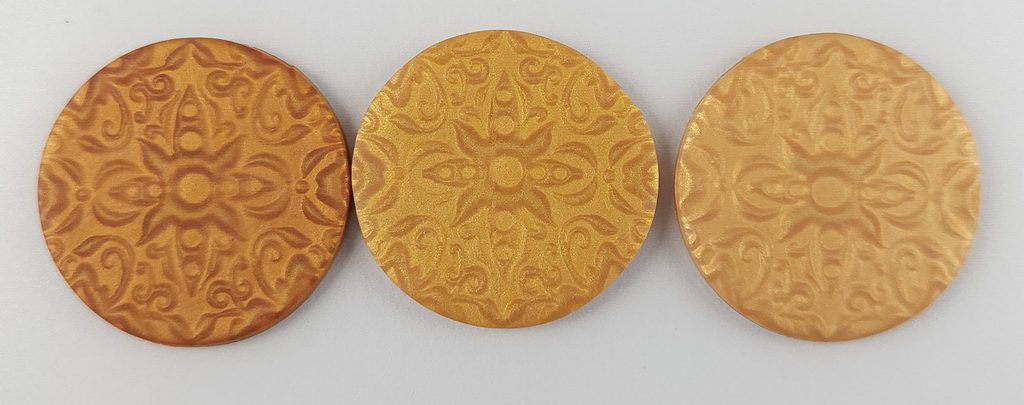
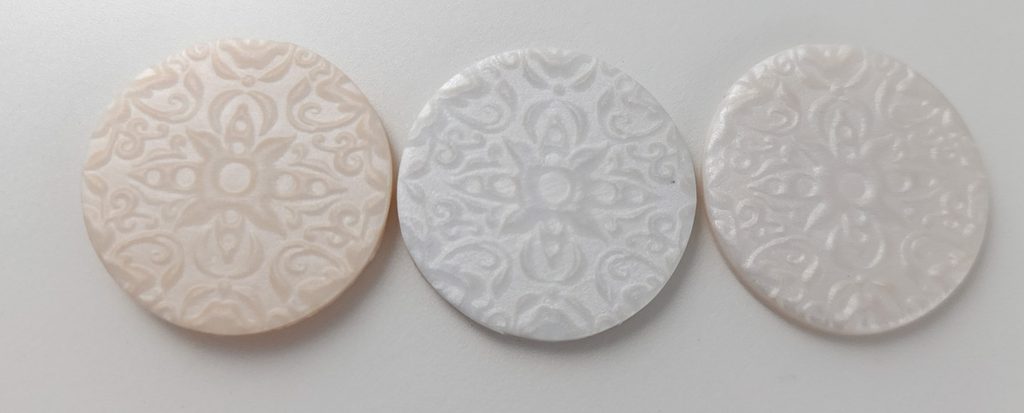
Du-kit only has two mica-filled or metallic colors, Gold and Pearl. Both have a fine mica particle size, so they don’t appear “glittery.” Both colors gave excellent mica shift. The gold is comparable to Premo 18K Gold in mica shift but has less “glitter” than Cernit Gold. It’s a good gold color that’s not too orangey. The Pearl color did discolor slightly (to brown) when baked at high heat, so it is a bit temperature-sensitive.
Baking Du-kit Polymer Clay
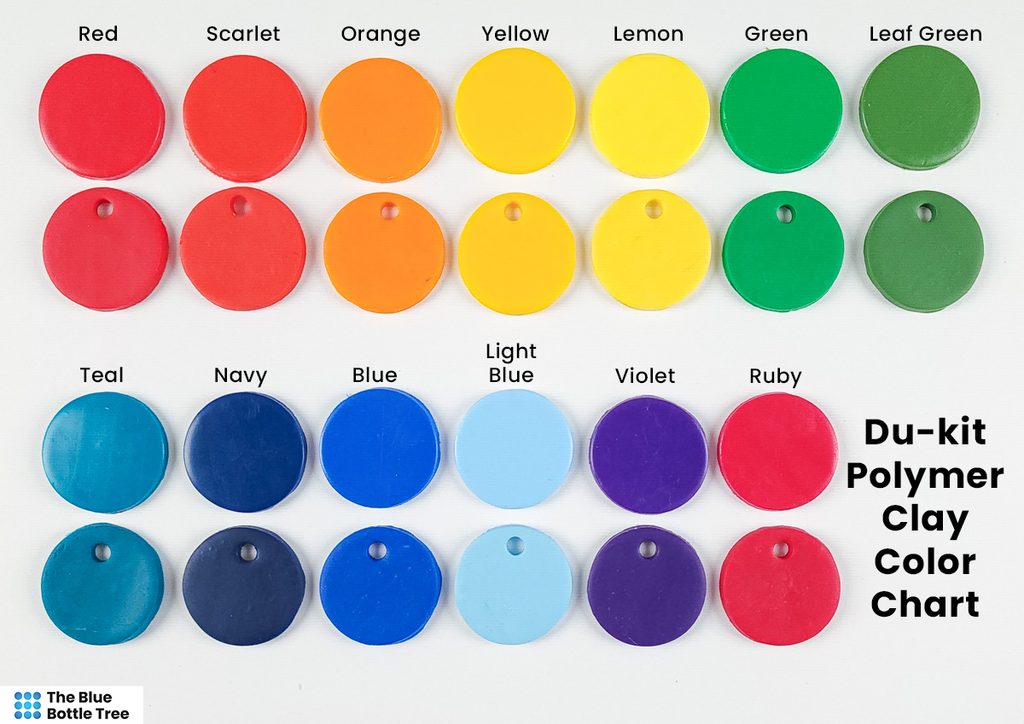
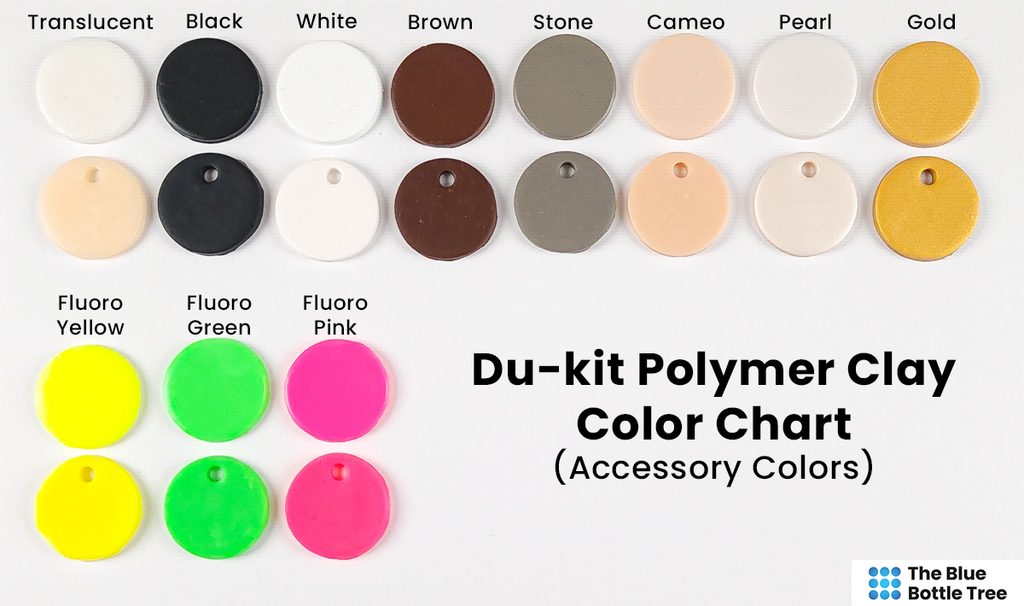
The manufacturer recommends baking Du-kit at 275°F(130°C) to 300°F(148°C) for 30 minutes to an hour. Even though the colors looked translucent in the package, I found that they didn’t darken considerably when baked, even at the higher temp of the range. There WAS darkening, but it wasn’t dramatic, as you can see below. You can see it mainly in the Navy color. The clay bakes matte at lower temperatures and with a slight sheen at higher temperatures.
Unless you’re making flat items, I do recommend supporting dimensional items that might droop or sag in the oven. I’ve made pinch pots with all the major clay brands, and this is the first time the vase’s lip has sagged in the oven. Notably, it didn’t crack, though! There’s a whole block of clay here, so this isn’t something you’re going to see happen with little flowers and such. But if you’re baking big stuff, support it!!
Misc Du-Kit Details
Du-kit bonds to itself nicely when attaching raw clay to baked. I tried it both “naked” and with some liquid clay. Both stayed stuck tight. (Hint: When bonding raw clay to baked clay, make sure you let it sit a while so the raw clay can bond better to the baked clay.)
Du-kit doesn’t have much of a smell. It’s there, very faintly, and you can smell an odor when it’s baking. But it’s not smelly at all.
Water doesn’t make Du-kit sticky, unlike Fimo. You can use water as a mold release with no fear of softening the clay or making it sticky.
When I mixed Du-kit with Fimo and Premo, it became somewhat softer and stickier. It still worked just fine as clay, but the consistency changed. Mixing with Kato didn’t change anything. It stayed the same stiffness.
With all the mixing I did by hand, I had plenty of chances to check if the color stained my fingers. It did not. Yes, there’s a small amount of color that comes off on your tools and hands, as with any brand of polymer clay. But it doesn’t stain and build up on your fingers the way Fimo does.
The white and translucent colors contain a fluorescent UV optical brightener, which means they glow slightly and appear whiter in strong UV light. Interestingly, the translucent from 2022 did not contain this dye. Only the white, translucent, and fluorescent colors are UV reactive.
| What was tested | Du-kit | Compared to |
|---|---|---|
| Handling/stiffness | Similar to an average block of Premo; softer than Kato | Premo, Kato |
| Texture when conditioning | Smooth, not crumbly, doesn’t shatter | Fimo (which does) |
| Baked strength (properly baked) | On par | Premo |
| Translucent clarity | Darkens some when baked, less clear | Cernit |
| Gold mica shift | Comparable shift, finer sparkle | Premo 18K Gold, Cernit Gold |
| Water as mold release | No stickiness | Fimo (gets sticky) |
| Color staining on hands | Light | Fimo (stains/builds up) |
| Mixing with other clays | Softer/stickier when mixed in | Fimo, Premo (Kato: no change) |
This reflects what I tested for this review, not a full evaluation of the other brands.
What About Du-kit Canes?
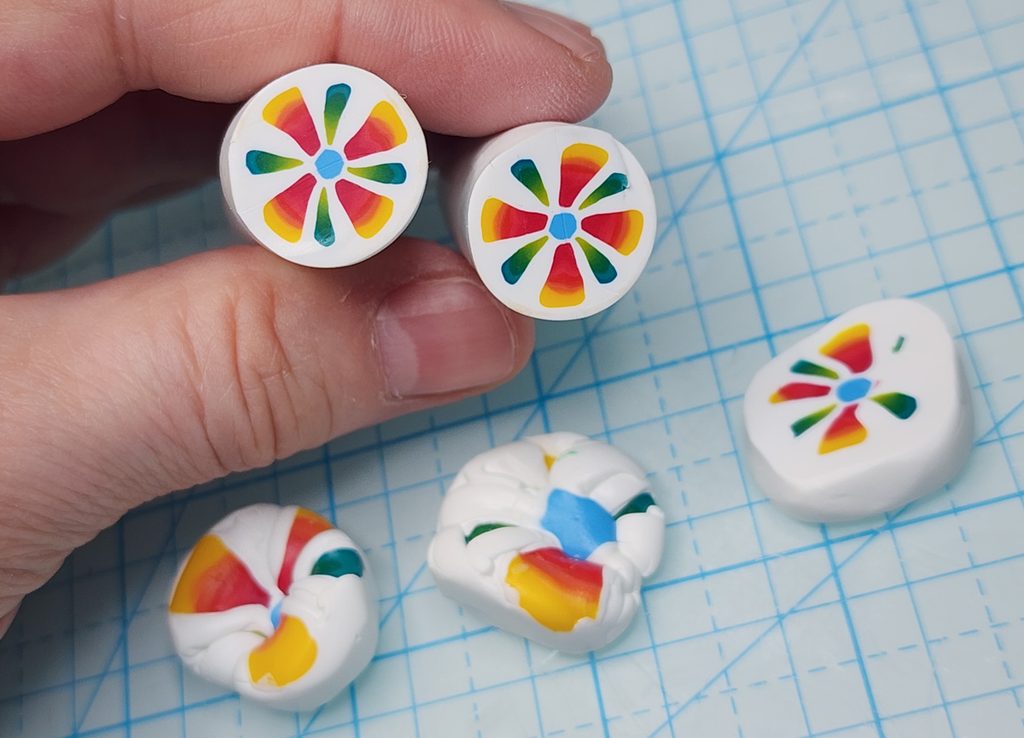
I had no trouble using Du-kit to make a simple cane from the scraps on my work table. It reduced nicely without unexpected distortion. The colors all seem to have the same consistency. The color separation was sharp. This is not a clay you have to wrestle. The clay is soft but not sticky or difficult to work with. It didn’t stick to itself more than expected. I would definitely cane with it again. However, I’m not a terribly exacting caner, so your experience may differ.
Strength and Flexibility
Online readers said they dislike Du-kit because it’s weak and prone to breaking. Guess what? That’s absolutely not true. If that’s happening, it’s underbaked. Simple as that. I did several tests on this. Here’s your proof.
Yes, when I baked strips of Du-kit at 275°F (130°C) for 45 minutes, they were quite strong and flexible. Make sure your oven is preheated and that the temperature remains stable for the full baking time. Of course, repeated flexion will break the same way that it will with any polymer clay. I would say that the strength was on par with Premo.
I also checked whether there was a difference in strength between the colors. I flattened my color swatch samples from above to make 24 swatches at #5 thickness, then baked them at 295°F (146°C) for 50 minutes (a bit hotter and longer) and found that none broke when folded in half sharply. Bending the dark colors did not produce a dramatic white line as you see with some brands.
Make sure that you bake this clay if you need to rely on its strength. The longer and hotter you bake it, the stronger it will be.
What About Carving Du-Kit?
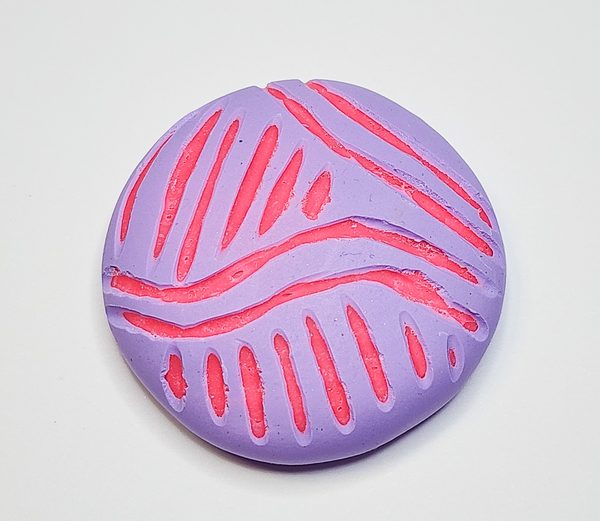
Well, I’m not sure if it’s my lack of skill on this or perhaps I didn’t bake the clay long enough, but I found that this clay didn’t carve particularly well. The carving tools caused chipping, which you can see below. With so many clays on the market, choose another clay for carving if that’s your jam.
Does Du-Kit Polish Well?
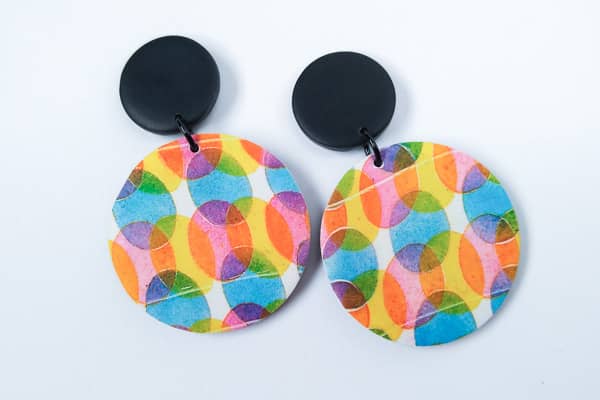
A favorite finish among many professional and longtime polymer clayers is the perfectly smooth, shiny, sanded-and-buffed finish. Can you get this finish with Du-kit? Yes, you can! I took all the leftover bits from my color mixing explorations and used the “Foss Fold technique” that Kristie Foss shared with us in Blue Bottle Insiders. I cut two circles for earrings, baked them, then sanded them perfectly smooth and buffed them to a super glossy finish. No, there is no varnish or resin here. Yes, polymer clay does this just fine. And yes, Du-kit works beautifully for this!
Du-kit Translucent
And finally, what about the translucent? How does it compare to other brands? Well, Du-kit translucent handles very, very well, with the same handling consistency as the other colors in their line. It is smooth, comes off the block without bubbles, and doesn’t shatter or crumble in the pasta machine. The unbaked, raw clay has no color cast. But it does darken pretty easily when you bake it. And it’s not as clear as Cernit. I think Du-kit translucent would work nicely for faux stones or as a base to be colored with inclusions. I would not use it for glass-like effects.
Where to Buy Du-kit Polymer Clay?
Since Du-kit is made in New Zealand, where can you buy it? So far, it’s only available in New Zealand, Australia, and on Amazon in the US. I was asked to weigh in on tariffs, but that info would depend on where you are and how it’s being purchased. If you order from Amazon in the US, all fees are included. It’s like ordering anything else on Amazon. If you’re in NZ or AU, check with the online retailer for their policies. I’m sure they’ll know how to help you buy it.
New Zealand – You can buy from Warehouse Stationery, Hobbyland (online store), Officemax, SupplyMe, Sunnys and a range of independent stores.
Australia – Buy Du-kit from Arthouse Direct.
Buying on Amazon US
Amazon is not the most user-friendly and search-friendly place. So if you search for Du-kit, you’re likely to get crazy, random results. I assure you, it IS available on Amazon! You can see all the clay in their Amazon shop here. To make things easier, I’ll include my Amazon Affiliate link for each here. That way I get a bit of dosh, and you get great clay to try.
Du-kit 50g Bars on Amazon
- Translucent
- Black
- White
- Brown
- Stone
- Cameo
- Pearl
- Gold
- Red
- Scarlet
- Orange
- Yellow
- Lemon
- Green
- Leaf Green
- Teal
- Navy
- Blue
- Light Blue
- Violet
- Ruby
- Fluoro Yellow
- Fluoro Green
- Fluoro Pink
Du-kit 250g Bars on Amazon
Credits
Many thanks to Paul Currie from Craft Polymers for sending me this clay to enjoy. And also thanks to Kim Snowden for sending me some Du-kit to try a few years ago as well. This gave me both old and new clays to try and enjoy. And to share the info with all of you!